Friday, January 30, 2009

Some Basic Islamic Beliefs

1) Belief in God:

Muslims believe in one, unique, incomparable God, Who has no son nor partner, and that none has the right to be worshipped but Him alone.  He is the true God, and every other deity is false.  He has the most magnificent names and sublime perfect attributes.  No one shares His divinity, nor His attributes.  In the Quran, God describes Himself:

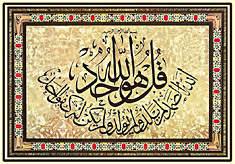
 Say, “He is God, the One.  God, to Whom the creatures turn for their needs.  He begets not, nor was He begotten, and there is none like Him.”  (Quran, 112:1-4)

Chapter 112 of the Quran written in Arabic calligraphy

Chapter 112 of the Quran written in Arabic calligraphy.

No one has the right to be invoked, supplicated, prayed to, or shown any act of worship, but God alone.

God alone is the Almighty, the Creator, the Sovereign, and the Sustainer of everything in the whole universe.  He manages all affairs.  He stands in need of none of His creatures, and all His creatures depend on Him for all that they need.  He is the All-Hearing, the All-Seeing, and the All-Knowing.  In a perfect manner, His knowledge encompasses all things, the open and the secret, and the public and the private.  He knows what has happened, what will happen, and how it will happen.  No affair occurs in the whole world except by His will.  Whatever He wills is, and whatever He does not will is not and will never be.  His will is above the will of all the creatures.  He has power over all things, and He is able to do everything.  He is the Most Gracious, the Most Merciful, and the Most Beneficent.  In one of the sayings of the Prophet Muhammad , we are told that God is more merciful to His creatures than a mother to her child.1  God is far removed from injustice and tyranny.  He is All-Wise in all of His actions and decrees.  If someone wants something from God, he or she can ask God directly without asking anyone else to intercede with God for him or her.

God is not Jesus, and Jesus is not God.2  Even Jesus himself rejected this.  God has said in the Quran:

 Indeed, they have disbelieved who have said, “God is the Messiah (Jesus), son of Mary.”  The Messiah said, “Children of Israel, worship God, my Lord and your Lord.  Whoever associates partners in worship with God, then God has forbidden Paradise for him, and his home is the Fire (Hell).  For the wrongdoers,3 there will be no helpers.”  (Quran, 5:72)

God is not a trinity.  God has said in the Quran:

 Indeed, they disbelieve who say, “God is the third of three (in a trinity),” when there is no god but one God.  If they desist not from what they say, truly, a painful punishment will befall the disbelievers among them. Would they not rather repent to God and ask His forgiveness?  For God is Oft-Forgiving, Most Merciful.  The Messiah (Jesus), son of Mary, was no more than a messenger... (Quran, 5:73-75)

Islam rejects that God rested on the seventh day of the creation, that He wrestled with one of His angels, that He is an envious plotter against mankind, or that He is incarnate in any human being.  Islam also rejects the attribution of any human form to God. All of these are considered blasphemous.  God is the Exalted.  He is far removed from every imperfection.  He never becomes weary.  He does not become drowsy nor does he sleep.

The Arabic word Allah means God (the one and only true God who created the whole universe).  This wordAllah is a name for God, which is used by Arabic speakers, both Arab Muslims and Arab Christians.  This word cannot be used to designate anything other than the one true God.  The Arabic word Allah occurs in the Quran about 2700 times.  In Aramaic, a language related closely to Arabic and the language that Jesus habitually spoke,4 God is also referred to as Allah.

2) Belief in the Angels:

Muslims believe in the existence of the angels and that they are honored creatures.  The angels worship God alone, obey Him, and act only by His command.  Among the angels is Gabriel, who brought down the Quran to Muhammad .

3) Belief in God’s Revealed Books:

Muslims believe that God revealed books to His messengers as proof for mankind and as guidance for them.  Among these books is the Quran, which God revealed to the Prophet Muhammad .  God has guaranteed the Quran’s protection from any corruption or distortion.  God has said:

 Indeed, We have sent down the Quran, and surely We will guard it (from corruption). (Quran, 15:9)

4) Belief in the Prophets and Messengers of God:

Muslims believe in the prophets and messengers of God, starting with Adam, including Noah, Abraham, Ishmael, Isaac, Jacob, Moses, and Jesus (peace be upon them).  But God’s final message to man, a reconfirmation of the eternal message, was revealed to the Prophet Muhammad .  Muslims believe that Muhammad  is the last prophet sent by God, as God has said:

 Muhammad is not the father of any one of your men, but he is the Messenger of God and the last of the prophets...  (Quran, 33:40)

Muslims believe that all the prophets and messengers were created human beings who had none of the divine qualities of God.

5) Belief in the Day of Judgment:

Muslims believe in the Day of Judgment (the Day of Resurrection) when all people will be resurrected for God’s judgment according to their beliefs and deeds.

6) Belief in Al-Qadar:

Muslims believe in Al-Qadar, which is Divine Predestination, but this belief in Divine Predestination does not mean that human beings do not have freewill.  Rather, Muslims believe that God has given human beings freewill.  This means that they can choose right or wrong and that they are responsible for their choices.

The belief in Divine Predestination includes belief in four things: 1) God knows everything.  He knows what has happened and what will happen.  2) God has recorded all that has happened and all that will happen.  3) Whatever God wills to happen happens, and whatever He wills not to happen does not happen.  4) God is the Creator of everything.

_____________________________

Footnotes:

(1) Narrated in Saheeh Muslim, #2754, and Saheeh Al-Bukhari, #5999. Back from footnote (1)

(2) It was reported by the Associated Press, London, on June 25, 1984, that a majority of the Anglican bishops surveyed by a television program said, “Christians are not obliged to believe that Jesus Christ was God.”  The poll was of 31 of England’s 39 bishops.  The report further stated that 19 of the 31 bishops said it was sufficient to regard Jesus as “God’s supreme agent.”  The poll was conducted by London Weekend Television’s weekly religious program, “Credo.” Back from footnote (2)

(3) The wrongdoers include the polytheists. Back from footnote (3)

(4) NIV Compact Dictionary of the Bible, Douglas, p. 42. Back from footnote (4)

Thursday, January 29, 2009

A Brief Introduction to Islam (part 2 of 2)

Description: A brief introduction to the meaning of Islam, the notion of God in Islam, and His basic message to humanity through the Prophets.


The Quran

The Arabic world “Al-Quran” literally means “the recitation”.  When used in regards to Islam, the word Quran means God’s final message to mankind, which was revealed to the Prophet Muhammad.  The Quran, sometimes spelled Koran, is the literal the word of God - as it clearly says time and time again.  Unlike other sacred scriptures, the Quran has been perfectly preserved in both its words and meaning in a living language.  The Quran is a living miracle in the Arabic language; and is know to be inimitable in its style, form and spiritual impact.  God’s final revelation to mankind, the Quran, was revealed to the Prophet Muhammad over a period of 23 years. 

The Quran, in contrast to many other religious books, was always thought to be the Word of God by those who believed in it, i.e. it wasn’t something decreed by a religious council many years after being written.  Also, the Quran was recited publicly in front of both the Muslim and non-Muslim communities during the life of the Prophet Muhammad.  The entire Quran was also completely written down in lifetime of the Prophet, and numerous companions of the Prophet memorized the entire Quran word-for-word as it was revealed.  So, unlike other scriptures, the Quran was always in the hands of the common believers; it was always thought to be God’s word and, due to wide-spread memorization,  it was perfectly preserved.

 In regards to the teachings of the Quran - it is a universal scripture addressed to all of mankind, and not addressed only to a particular tribe or “chosen people”.  The message that it brings is nothing new, but the same message of all of the prophets - submit to Almighty God and worship Him alone.  As such, God’s revelation in the Quran focuses on teaching human beings the importance of believing in the Oneness of God and framing their lives around the guidance which He has sent.  Additionally, the Quran contains the stories of the previous prophets, such as Abraham, Noah, Moses and Jesus; as well as many commands and prohibitions from God.  In modern times where so many people are caught up in doubt, spiritual despair and “political correctness”, the Quranic teachings offer solutions to the emptiness of our lives and the turmoil that is gripping the world today.  In short, the Quran is the book of guidance par excellence.

The Prophet Muhammad

Unlike the founders of many religious, the final prophet of Islam is a real documented and historical figure.  He lived in the full light of history, and the most minute details of his life are known.  Not only do Muslims have the complete text of God’s words that were revealed to Muhammad, but they have also preserved his sayings and teachings in what is called “hadeeth” literature.  This having been said, it should be understood that Muslims believe that the Prophet Muhammad was only a man chosen by God, and that he is not divine in any way.  In order to avoid the misguided wish to deify him, the Prophet Muhammad taught Muslims to refer to him as “God’s Messenger and His Slave”.  The mission of the last and final prophet of God was to simply teach that “there is nothing divine or worthy of being worshipped except for Almighty God”, as well as being a living example of God’s revelation.  In simple terms, God sent the revelation to Muhammad, who in turn taught it, preached it, lived it and put it into practice. 

In this way, Muhammad was more than just a “prophet” in the sense of many of the Biblical prophets, since he was also a statesman and ruler.  He was a man who lived a humble life in the service of God, and established an all-encompassing religion and way of life by showing what it means to be an ideal friend, husband, teacher, ruler, warrior and judge.  For this reason, Muslims follow him not for his own sake, but in obedience to God, because Muhammad not only showed us how to deal with our fellow human beings, but more importantly, showed us how to relate to and worship God; worship Him in the only way pleasing to Him. 

Like other prophets, Muhammad faced a great deal of opposition and persecution during his mission.  However, he was always patient and just, and he treated his enemies well.  The results of his mission were very successful, and even though his mission started in one of the most backward and remotes places on earth, within a hundred years of the death of Muhammad, Islam had spread from Spain to China.  The Prophet Muhammad was the greatest of all of God’s prophets, not because he had new doctrines or greater miracles, but because it was him who was chosen to bear the last revelation which would come to humanity from God, one suitable for all places, times, and people, everlasting and unchanging until the Last Day.

The Islamic Way of Life

In the Holy Quran, God teaches human beings that they were created in order to worship Him, and that the basis of all true worship is God-consciousness.  Since the teachings of Islamic encompass all aspects of life and ethics, God-consciousness is encouraged in all human affairs.  Islam makes it clear that all human acts are acts of worship if they are done for God alone and in accordance to His Divine Law.  As such, worship in Islam is not limited to religious rituals. 

The teachings of Islam act as a mercy and a healing for the human soul, and such qualities as humility, sincerity, patience and charity are strongly encouraged.  Additionally, Islam condemns pride and self-righteousness, since Almighty God is the only judge of human righteousness. 

The Islamic view of the nature of man is also realistic and well-balanced.  Human beings are not believed to be inherently sinful, but are seen as equally capable of both good and evil. 

Islam also teaches that faith and action go hand-in-hand.  God has given people free-will, and the measure of one’s faith is one’s deeds and actions.  However, human beings have also been created weak and regularly fall into sin.  This is the nature of the human being as created by God in His Wisdom, and it is not inherently “corrupt” or in need of repair.  This is because the avenue of repentance is always open to all human beings, and Almighty God loves the repentant sinner more than one who does not sin at all. 

The true balance of an Islamic life is established by having a healthy fear of God as well as a sincere belief in His infinite Mercy.  A life without fear of God leads to sin and disobedience, while believing that we have sinned so much that God will not possibly forgive us only leads to despair.  In light of this, Islam teaches that only the misguided despair of the Mercy of their Lord. 

Additionally, the Holy Quran, which was revealed to the Prophet Muhammad, contains a great deal of teachings about the life hereafter and the Day of Judgment.  Due to this, Muslims believe that all human beings will ultimately be judged by God for their beliefs and actions in their earthly lives.  In judging human beings, Almighty God will be both Merciful and Just, and people will only be judged for what they were capable of. 

Sufficient is it to say that Islam teaches that life is a test, and that all human beings will be accountable before God.  A sincere belief in the life of the hereafter is the key to leading a well-balanced and moral life.  Otherwise, life is viewed as an end in itself, which causes human beings to become more selfish, materialistic and immoral.

Islam for a Better Life

Islam teaches that true happiness can only being obtained by living a life full of God-consciousness and being satisfied with what God has given us.  Additionally, true “freedom” is freedom from being controlled by our base human desires and being ruled by man-made ideologies.  This stands in stark contrast to the view of many people in the modern world, who consider “freedom” to be the ability to satisfy all of their desires without inhibition.  The clear and comprehensive guidance of Islam gives human-beings a well-defined purpose and direction in life.  In addition to being members of the human-brotherhood of Islam, its well-balanced and practical teachings are a source of spiritual comfort, guidance and morality.  A direct and clear relationship with Almighty God, as well as the sense of purpose and belonging that ones feels as a Muslim, frees a person from the many worries of everyday life. 

In short, the Islamic way of life is pure and wholesome.  It builds self-discipline and self-control through regular prayer and fasting, and frees human-beings from superstition and all sorts of racial, ethnic and national prejudices.  By accepting to live a God-conscious life, and realizing that the only thing that distinguishes people in the sight of God is their consciousness of Him, a person’s true human dignity is realized.

From: islamreligion.com

A Brief Introduction to Islam (part 1 of 2)

Description: A Brief Introduction To The Meaning Of Islam, The Notion Of God In Islam, And His Basic Message To Humanity Through The Prophets.


Islam and Muslims

The word “Islam” is an Arabic word which means “submission to the will of God”.  This word comes from the same root as the Arabic word “salam”, which means “peace”.  As such, the religion of Islam teaches that in order to achieve true peace of mind and surety of heart, one must submit to God and live according to His Divinely revealed Law.  The most important truth that God revealed to mankind is that there is nothing divine or worthy of being worshipped except for Almighty God, thus all human beings should submit to Him.

The word “Muslim” means one who submits to the will of God, regardless of their race, nationality or ethnic background.  Being a Muslim entails wilful submission and active obedience to God, and living in accordance with His message.  Some people mistakenly believe that Islam is just a religion for Arabs, but nothing could be further from the truth.  Not only are there converts to Islam in every corner of the world, especially in England and America, but by taking a look at the Muslim World from Bosnia to Nigeria, and from Indonesia to Morocco, one can clearly see that Muslims come from many various races, ethnic groups and nationalities.  It is also interesting to note that in actuality, more than 80% of all Muslims are not Arabs - there are more Muslims in Indonesia than in the whole Arab World!  So, though even though it is true that most Arabs are Muslims, the large majority of Muslims are not Arabs.  However, anyone who submits completely to God and worships Him alone is a Muslim.

Continuity of the Message

Islam is not a new religion because “submission to the will of God”, i.e. Islam, has always been the only acceptable religion in the sight of God.  For this reason, Islam is the true “natural religion”, and it is the same eternal message revealed through the ages to all of God’s prophets and messengers.  Muslims believe that all of God’s prophets, which include Abraham, Noah, Moses, Jesus and Muhammad, brought the same message of Pure Monotheism.  For this reason, the Prophet Muhammad was not the founder of a new religion, as many people mistakenly think, but he was the final Prophet of Islam.  By revealing His final message to Muhammad, which is an eternal and universal message for all of mankind, God finally fulfilled the covenant that He made with Abraham, who was one of the earliest and greatest prophets.

Sufficient is it to say that the way of Islam is the same as the way of the prophet Abraham, because both the Bible and the Quran portray Abraham as a towering example of someone who submitted himself completely to God and worshipped Him without intermediaries.  Once this is realized, it should be clear that Islam has the most continuous and universal message of any religion, because all prophets and messengers were “Muslims”, i.e.  those who submitted to God’s will, and they preached “Islam”, i.e. submission to the will of Almighty God.

The Oneness of God

The foundation of the Islamic faith is belief in the Oneness of Almighty God - the God of Abraham, Noah, Moses and Jesus.  Islam teaches that a pure belief in One God is intuitive in human beings and thus fulfils the natural inclination of the soul.  As such, Islam’s concept of God is straightforward, unambiguous and easy to understand.  Islam teaches that the hearts, minds and souls of human beings are fitting receptacles for clear divine revelation, and that God’s revelations to man are not clouded by self-contradictory mysteries or irrational ideas.  As such, Islam teaches that even though God cannot be fully comprehended and grasped by our finite human minds, He also does not expect us to accept absurd or demonstrably false beliefs about Him.

According to the teachings of Islam, Almighty God is absolutely One and His Oneness should never be compromised by associating partners with Him - neither in worship nor in belief.  Due to this, Muslims are required to maintain a direct relationship with God, and therefore all intermediaries are absolutely forbidden.  From the Islamic standpoint, believing in the Oneness of God means to realize that all prayer and worship should be exclusively for God, and that He alone deserves such titles as “Lord” and “Saviour”.  Some religions, even though they believe in “One God”, do not make all of their worship and prayers for Him alone.  Also, they also give the title of “Lord” to beings that are not All-Knowing, All-Powerful and Un-Changing - even according to their own scriptures.  Suffice it to say that according to Islam, it is not enough that people believe that “God is One”, but they must actualize this belief by proper conduct.

In short, in the Islamic concept of God, which is completely based on Divine Revelation, there is no ambiguity in divinity - God is God and man is man.  Since God is the only Creator and continual Sustainer of the Universe, He is transcendent above His creation - the Creator and the creature never mix.  Islam teaches that God has a unique nature and that He is free from gender, human weaknesses and beyond anything which human beings can imagine.  The Quran teaches that the signs and proofs of God’s wisdom, power and existence are evident in the world around us.  As such, God calls on man to ponder over the creation in order to build a better understanding of his Creator.  Muslims believe that God is Loving, Compassionate and Merciful, and that He is concerned with the daily affairs of human beings.  In this, Islam strikes a unique balance between false religious and philosophical extremes.  Some religions and philosophies portray God as just an impersonal “Higher Power” who is uninterested, or unaware, of the life of each individual human.  Other religions tend to give God human qualities and teach that He is present in His creation, by being incarnate in someone, something - or even everything.  In Islam, however, Almighty God has clarified the truth by letting mankind know that He is “Compassionate”, “Merciful”, “Loving” and the “Answerer of Prayers”.  But He as also emphasized strongly that “there is nothing like unto Him”, and that He is high above time, space and His creation.  Finally, it should be mentioned that the God that Muslims worship is the same God that Jews and Christians worship - because there is only one God.  It is unfortunate that some people mistakenly believe that Muslims worship a different God than Jews and Christians, and that “Allah” is just the “god of the Arabs”.  This myth, which has been propagated by the enemies of Islam, is completely false since the word “Allah” is simply the Arabic name for Almighty God.  It is the same word for God which is used by Arabic-speaking Jews and Christians.  However, it should be clarified that even though Muslims worship the same God as Jews and Christian, their concept of Him differs somewhat from the beliefs of other religions - mainly because it is based completely on Divine Revelation from God.  For example, Muslims reject the Christian belief that God is a Trinity, not only because the Quran rejects it, but also because if this was God’s true nature, He would have clearly revealed it to Abraham, Noah, Jesus and all of the other prophets.

From: islamreligion.com

Template by:
Free Blog Templates